Desaparecidos: Felipe Michelini confirmó que comenzaron las búsquedas en el Batallón 14
Desaparecidos: Felipe Michelini confirmó que comenzaron las búsquedas en el Batallón 14
Reportaje Radio Uruguay
Desaparecidos: Felipe Michelini confirmó que comenzaron las búsquedas en el Batallón 14
Reportaje Radio Uruguay
Reportaje Diario “El País”
Fighting for the victims of crimes against humanity, at home and abroad. Buenos Aires Times
Saturday 24 March, 2018
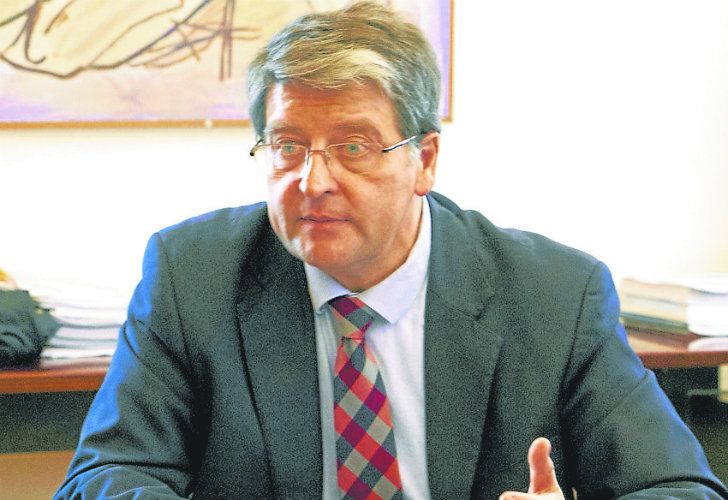
For Dr. Felipe Michelini, working to ensure those who commit crimes against humanity face justice is personal.
He is the son of Uruguayan journalist and politician, Zelmar Michelini, one of the founders of Uruguay’s Frente Amplio (Broad Front) coalition, who was assassinated and found dead in Buenos Aires during the initial few months of Argentina’s last military dictatorship (1976-1983).
A lawyer by trade, Felipe has represented the Americas and Caribbean States on the board for the International Criminal Court’s Trust Fund for Victims since 2016. He also currently serves as an honorary member of Uruguay’s Working Group for Truth and Justice.
Michelini, a former congressman, comes from a big family. He remarks that himself and his nine siblings were very politically involved, and says while at university he began to get involved in student resistance movements. Once he moved to New York City to study at Columbia Law School, his career took an international turn.
INTERNATIONAL TURN
Today, he is dedicated to his work. The ICC’s Trust Fund for Victims operates on two basic mandates. The reparations mandate, as explained on the Fund’s website, allows the TFV to collect “fines or forfeitures from a convicted individual in a war crimes case, in order to provide reparations awards to victims.” The assistance part of the mandate allows for the TFV to work with affected communities, victims, and their relatives, without having to depend on their criminal proceedings.
Michelini specifically highlights the assistance mandate as “a very important innovation,” using Uganda to illustrate his argument. Prosecutors at the ICC at The Hague have sought to put Ugandan guerrilla commanders on trial atrocities committed by the Lord’s Resistance Army (LRA) insurgency group. Michelini says that the assistance mandate has “allowed the Trust Fund to be in Uganda for 20 years,” despite the ongoing nature of both ex-guerrilla commander Dominic Ongwen’s case and the fact that ex-LRA leader Joseph Kony is still in hiding.
Michelini and the TFV, whose responsibility he describes as “respond[ing] to the harm resulting from the crimes under the jurisdiction of the ICC, by ensuring the rights of victims and their families through the provision of reparations and assistance,” recently returned from a monitoring visit to Uganda to check up on the current TFV projects in the country and speak with victim survivors and affected communities.
“We had the urgent situation of poverty and very harsh living conditions, but with the impact of 10-15 years of war, it has impacted the whole country. The Lord’s Resistance Army that was led by Mr. Kony had incorporated such crimes as rape in a systematic way, and spread forced enlistment of children of a very [young] age and used them in combat. The kind of crimes we’re talking about are really serious,” he elaborated.
The TFV, working with national and international partners in the field, is working to have physical rehabilitation, psychological rehabilitation, and material support available for all victims of crimes against humanity.
CLOSER TO HOME
Quizzed about the TFV’s role in South America, Michelini specifies that the recent past of state terrorism in Uruguay, Argentina, and Chile do not come under the jurisdiction of the ICC because they took place before the Rome Statute, which established the ICC and the TFV.
The same applies to the conflicts of Nicaragua, El Salvador and Honduras.
“I will say,” Michelini exempted, “that can be the case with Colombia, with its ongoing investigation and with Venezuela.”
Michelini’s work in his home country is currently centred on the Working Group for Truth and Justice, an initiative started by President Tabaré Vázquez. The group, which brings together political and religious figures and victims, which has been found itself in the spotlight of late, following the recent withdrawal of the Mothers and Family Members of Detained Disappeared Uruguayans.
In a statement issued March 1, the Mothers and Family Members expressed frustration over the “immense and persistent work of asking and waiting” that they argue has not translated into real, useful information coming to light, citing the Armed Forces as “the principal obstacle in the search for the disappeared and for truth and justice” in their search for military intelligence.
“They’re not angry about the Working Group for Truth and Justice,” explains Michelini.
“They’re angry with the executive power of Uruguay and say that they wanted more commitment to force the military to talk and bring information. In that sense, they came to the conclusion that the results are not as good as they wanted them to be. And I kind of agree with that.”
Many Uruguayan military officials have made a pact where they do not confess or share the crimes they committed during the dictatorship, making the job of the Working Group doubly difficult in extracting useful information from the military, as well as having limited access to their records.
Michelini and the Working Group’s members met with President Vazquez shortly after the announcement by the Mothers and Family Members, to address their departure and the creation and integration of the Special Prosecutor for Crimes Against Humanity into the Group’s work, as Uruguay attempts to come to terms with its past.
But despite the challenges this work brings, Michelini is not disheartened. He finds comfort in the mission of both the Trust Fund and the Working Group.
“I think it’s the same topic, the struggle against the culture of impunity. The idea that there are crimes that cannot be committed. It’s hard work internationally and nationally,” said Michelini.
“It is a commitment on truth, justice, recollection, and reparation.”
https://ladiaria.com.uy/articulo/2018/3/vazquez-le-indico-al-grupo-de-trabajo-por-verdad-y-justicia-que-mantenga-el-dialogo-con-familiares/
La Diaria
Artículo Uypress – Agencia Uruguaya de Noticias
Thursday 30 November, 2017

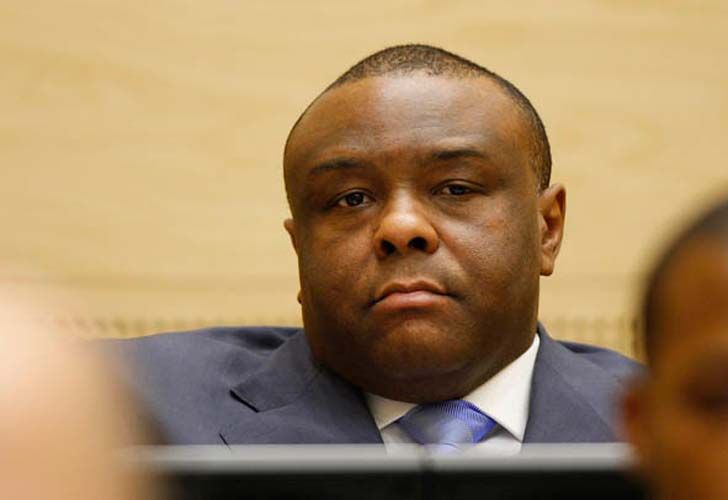
Next week the Assembly of States Parties (ASP), the management oversight and legislative body of the International Criminal Court (ICC), will have its 16th session in New York. This assembly of 123 representatives from State Parties is the political body of the system created by the 1998 Rome Statute.
This year, the main issue of debate for the Assembly will be the decision to make the ‘Kampala Amendments’ (two amendments to the Rome Statute, adopted by Review Conference in Kampala) operational on the crime of aggression to complete the capabilities of international justice.
The machinery of the ASP and the Rome Statute are abstracts ideas for the society in general. However, if we recall instead the names of Lubanga Dyilo, Jean-Pierre Bemba, Ahmad al-Faqi al-Mahdi, in the Democratic Republic of the Congo, Central African Republic and the Republic of Mali respectively, these recollections become very concrete for thousands of victims.
The legacy of Lubanga’s wrongdoings, war crimes featuring the enlistment and conscription of children under the age of 15 are very real. Bemba’s crimes against humanity and war crimes of rape, murder and pillage, as well as al-Mahdi’s direction of attacks on religious and historic buildings in Timbuktu, are present in the everyday life of their sufferers.
The Rome Statute was designed to prosecute those suspected of grave crimes such as genocide, war, against humanity and aggression; it is to be used when state actors cannot or do not want to judge actions committed in their territory or by its citizens. Its existence is, by itself, a reaffirmation of the will to eradicate the culture of impunity. Full accountability for serious human rights crimes, particularly for those having important official responsibilities, is a concept that has evolved definitively. There is no doubt that there is an international legal duty for all states involved in the global community.
This international agreement has seen the advancement of ad-hoc tribunals, such as those involving the former state of Yugoslavia and for Rwanda. It is an addition to the set of instruments used to protect human rights and aims to ensure that states respect, guarantee and promote human dignity. In the case of the Rome Statute, it establishes an international criminal justice system that holds individuals involved in such serious crimes accountable, creating a permanent, impartial, independent and effective court for their criminal prosecution. Its purpose, besides being punitive, is also preventative and reparatory.
Assisting victims
Regarding this final point, the system provides a Trust Fund to Benefit Victims, which responds in two ways: giving reparations and assistance mandates. The first occurs in the case of a direct ruling of the ICC. The second is to shelter victims against a situation of great severity regarding the crimes under the court’s jurisdiction.
These decisions are part of the Trust Fund’s efforts since 2009, under the assistance mandate victims in both Northern Uganda and the Democratic Republic of the Congo have been helped. This also reflects the Rome Statute’s purpose: the will of the international community to challenge impunity in relation to the most heinous crimes, by focusing on the punishment of those responsible but also on the compensation of victims. This mandate is in the framework of the interpretation and application of human rights protection norms.
Up to now, more than 350,000 victims, many of whom have been subjected of the most serious harassments and torments, have benefitted from the Trust Fund’s work.
Latin America and the Caribbean people are living witnesses to the scourge of a culture of impunity, as a result of state terrorism, civil war and colonialism. The dividing line between civilisation and barbarity is constructed jointly and it has concluded that certain practices such as genocide, war crimes and crimes against humanity are unacceptable. If they occur, facts should be thoroughly investigated, suspects should be brought to justice and those responsible should be punished with guarantees of due.
To date, 29 countries in Latin America and the Caribbean have ratified the Rome Statute, freely and voluntarily committing them to fight against impunity.
Our region has a high level of social, economic and political complexity. It is a situation exacerbated due to the fact that we have social structures with high levels of inequality, in the distribution of income, and the existence of endemic situations concerning the violation of human rights. Gender, race and social conditions, among other factors, aggravate these condition. Building a society that offers dignity to everyone is a huge challenge. In this sense, the substantive elements of the International Criminal Court’s treaty constitute a high amount of commitment by our states. They are a permanent sight of encouragement and hope for the human rights movement.
In my country, Uruguay, the Rome Statue has been a central component in the relevant construction of a state policy on international matters against impunity. It has provided the basis of singular importance in the progress of the interpretation and application of the Statute of Rome through the Law N°18.026, which has become an example law for others in the international community. It has also backed the strengthening and consolidation of the observance of human rights, on the basis of truth and justice, particularly in addressed the illegal actions by the state over the period dating 1968-1973, as well as for the state terrorism that took place between 1973 and 1985. There are pending matters, however, including helping relatives to discover the whereabouts of approximately 200 victims of forced disappearances both inside and outside borders, within the framework of the Operation Condor criminal plan.
A lot to do
Despite the progress made, there is still a lot to do. Strengthening preventative measures so that these serious acts that threaten the dignity of the victims do not occur is an ongoing concern. It is necessary that states take action in a timely manner when investigating and punishing crimes of great severity. Victims must also be provided with reparations too that grant them dignify them as individuals.
Continuing to work on the three factors of the Rome Statute – prevention, punishment and reparation – is an ethical, legal and political imperative for the entire international community, which has integrated the common ideal of respect for rights and freedoms, as expressed in the Universal Declaration of Human Rights, into its principles.
This 16th Assembly will be a special occasion for one other reason. It will be an to honour the first president of the Board of Directors of the Trust Fund for Victims, the lawyer Simone Veil, who died on June 30 this year. Veil was a survivor of the Holocaust, having spent time in the concentration camps of Auschwitz and Bergen-Belsen. She was able to recover from the tragedy despite the fact it followed her throughout her entire life, even as she became a brilliant and successful professional. Her career was devoted to the untiring struggle for equality for women and migrants. More than just a French citizen, she was a true citizen of the world. Her legacy teaches us never to forget the crimes that have passed yet always to approach the future with optimism.
The New York meeting this week should also serve as a warning for the future Lubangas, Bembas and Al Mahdis of the world. It should be clear that if you trespass over the boundaries of civilisation, sooner or later justice will knock at your door. You will be held accountable for your depravities. At both regional and national levels, we are a stubbornly optimistic group and – following the example of Veil – we will continue the struggle for justice, truth and reparations for victims and their families.
—
Felipe Michelini is a Uruguayan attorney, human rights professor and former lawmaker, as well as a member of the Board of the Trust Fund for Victims of the International Criminal Court.
Presentación del Plan Estratégico de la Cátedra UNESCO de Derechos Humanos de la UDELAR – Exposición – Diario La República